Current

System Error: Human?

Annual Exhibition of the Professional Association of Visual Artists Hamburg

Image credits below


System Error: Human?
Annual Exhibition of the Professional Association of Visual Artists Hamburg

at Kunsthaus Hamburg
7 February – 15 March 2026

Participating artists: Sevil Amini, Christian M. Beier, Sarah Bender-Kronberg, Matthias Berthold, Wolfgang Block, Roland Doil, Christa Donatius, Frieder Falk, Satenik Ghulijanyan, Şakir Gökçebağ, Frauke Hänke & Claus Kienle, Friederike Höppner, Katharina Holstein-Sturm, Ute Klapschuweit, Thomas Klockmann, Agatha Kosobucki, Kristina Küster-Witt, Max Messemer, Per Pegelow, Jens Rausch, Florian Reckert, Lena Schmidt, Janine Seelen, Shahram Shahmiri, Kuo Tian, Jenni Tietze, Annika Unterburg, Sebastian Unterrainer, Frederick Vidal, Andrea Ziegler


Every human being is a complex set of routines, beliefs and attempts at establishing order. Defects, disruptions and irritations are often viewed as threats – but perhaps this is actually where our true potential lies. It is precisely when something tilts or contradicts itself that spaces emerge for new perceptions.

For this year’s members exhibition of the Professional Association of Visual Artists Hamburg, a jury of five experts selected thirty artistic positions from 145 submissions. System Error: Human? compiles works that explore the fragile, the unfinished and the contradictory. Between analogue material and the digital code, between earth, fabric, metal and pixels, they negotiate questions of control, loss and new beginnings. They display breaks as transitions, cracks as openings, irritations as starting points for new forms of coexistence. The exhibition thus becomes a polyphonic plea for the productive power of the error – and for art as a field where orientation is continually being re-created.

Jury: Anja Giese, Barbara Maahs, Sibylle Mayr, Maryam Naderi, Avid Saeed


Exhibition Opening
Fri, 6 February 2026, 7 pm


Image 1: Installation view: System Error: Human? – Annual Exhibition of the Professional Association of Visual Artists Hamburg, Kunsthaus Hamburg 2026, Photo: Antje Sauer; Artworks of Sakir Gökcebag and Andrea Ziegler © VG Bild-Kunst, Bonn 2026
Image 2: Detail of: Christa Donatius, Im Zustand der Schwebung, 2025, © VG Bild-Kunst, Bonn 2026
Image 3: Installation view: System Error: Human? – Annual Exhibition of the Professional Association of Visual Artists Hamburg, Kunsthaus Hamburg 2026, Photo: Antje Sauer; Artwork of Katharina Holstein-Sturm © VG Bild-Kunst, Bonn 2026
Image 4: Detail of: Satenik Ghulijanyan, Geborgene Träume, 2024
Image 5: Frieder Falk, Schwindel, 2025, © VG Bild-Kunst, Bonn 2026
Image 6: Installation View: System Error: Human? – Annual Exhibition of the Professional Association of Visual Artists Hamburg, Kunsthaus Hamburg 2026, Foto: Antje Sauer; Artwork of Frederick Vidal © VG Bild-Kunst, Bonn 2026
Image 7: Andrea Ziegler, MAV, 2023, © VG Bild-Kunst, Bonn 2026

Whisper Down the Lane –
Carolina Lehan

Installation views: Whisper Down the Lane – Carolina Lehan, Kunsthaus Hamburg 2026; Photos: Sarah Thielsen


Whisper Down the Lane
Carolina Lehan

5 February – 3 May 2026
Kunsthaus foyer


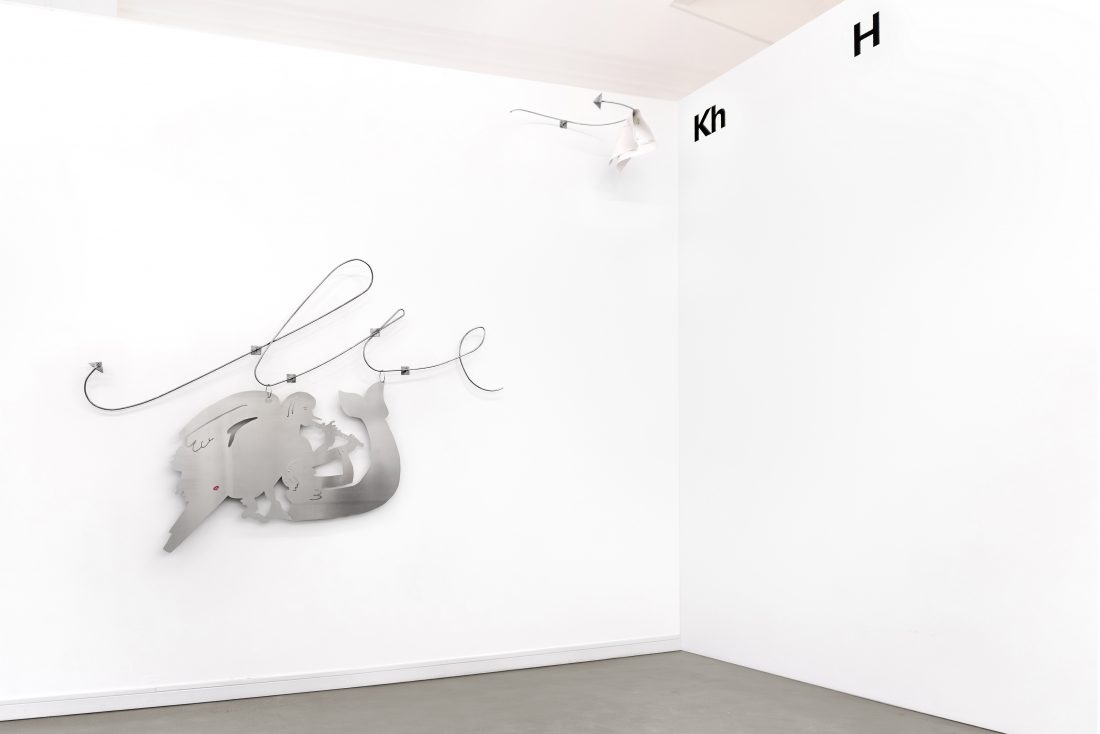
Moving accross planes of time, Carolina Lehan’s installation For the Time Being draws on the myth of the siren, in which histories of homeland, female bonds and lesbian as well as queer partnership intersect with forms of erasure and resilience. The work functions both as a physical anchor and as a conceptual axis between the form of a love letter and the archetype of the siren.

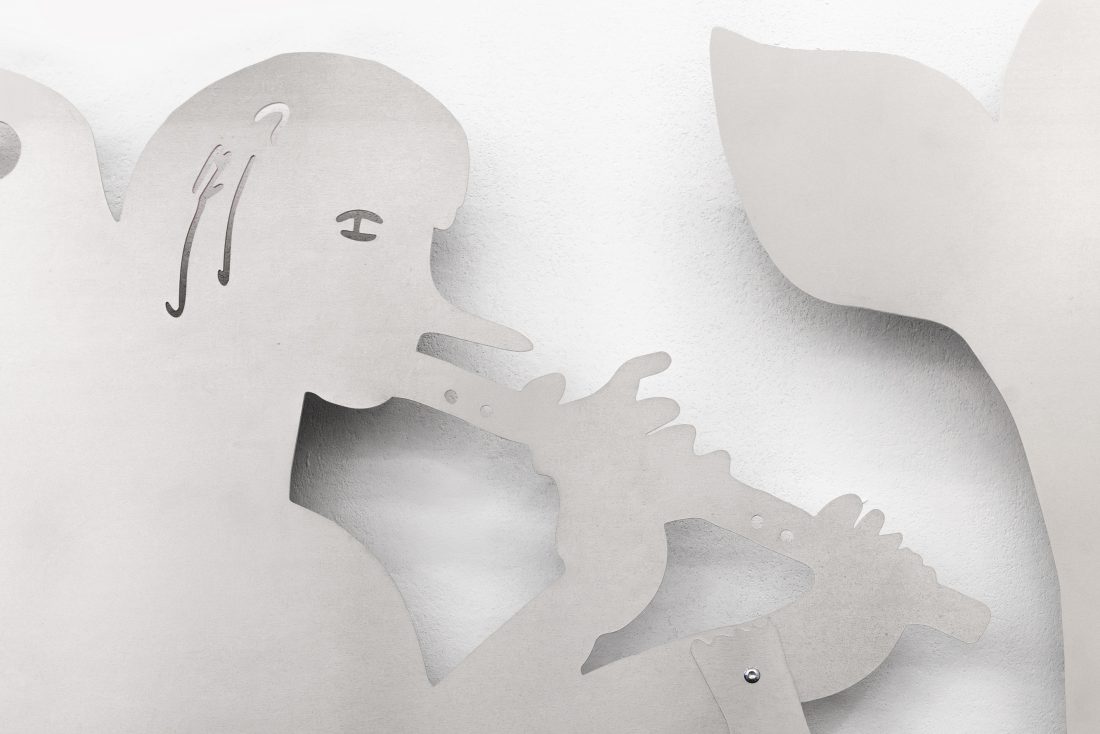
In their earliest Greek appearance, sirens were hybrid beings, part woman, part bird, who inhabited coastal rocks and liminal spaces. In the Middle Ages, their image gradually transformed into that of the mermaid. This transformation reflects broader perceptions of femininity shaped through myth and archetype, in which the female figure is repeatedly cast as frightening or dangerous, before being altered into a more pleasant, seductive form. In For the Time Being, a siren and a mermaid appear together as a pair. They are presented as companions entwined in song and pathos, offering a renewal of their mythic presence not as temptresses but as witnesses to the enduring complexity of love. Their presence evokes centuries of close, intimate relationships between women that have often been marginalized, distorted, or erased.

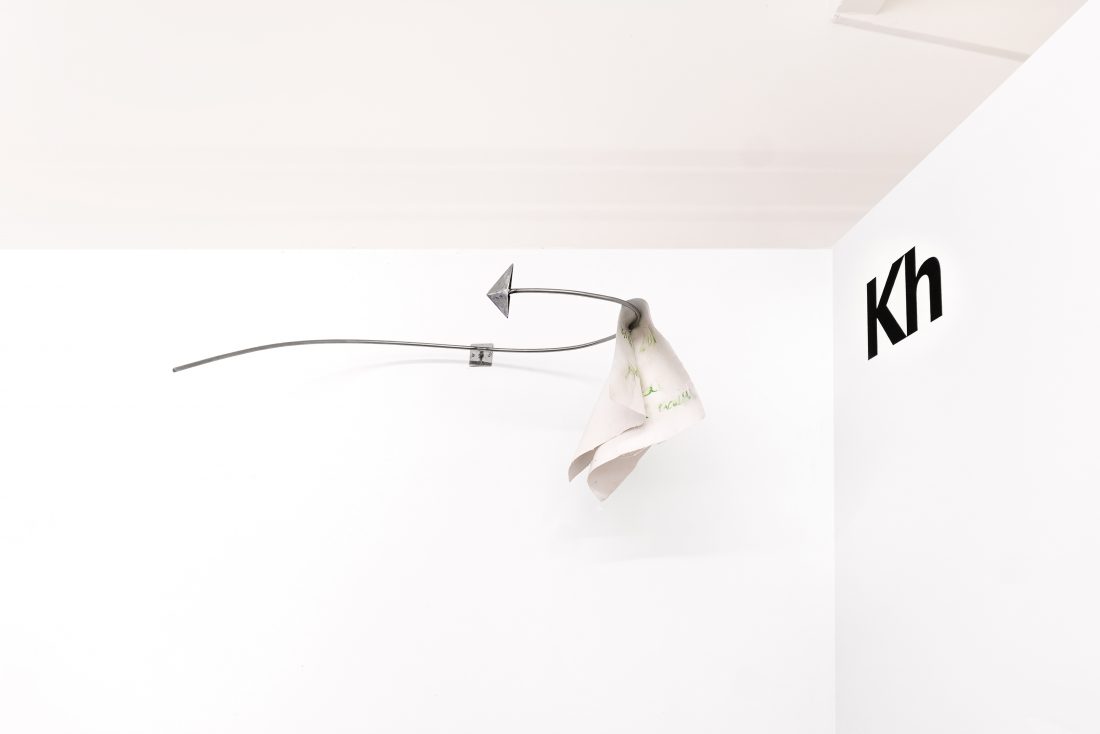
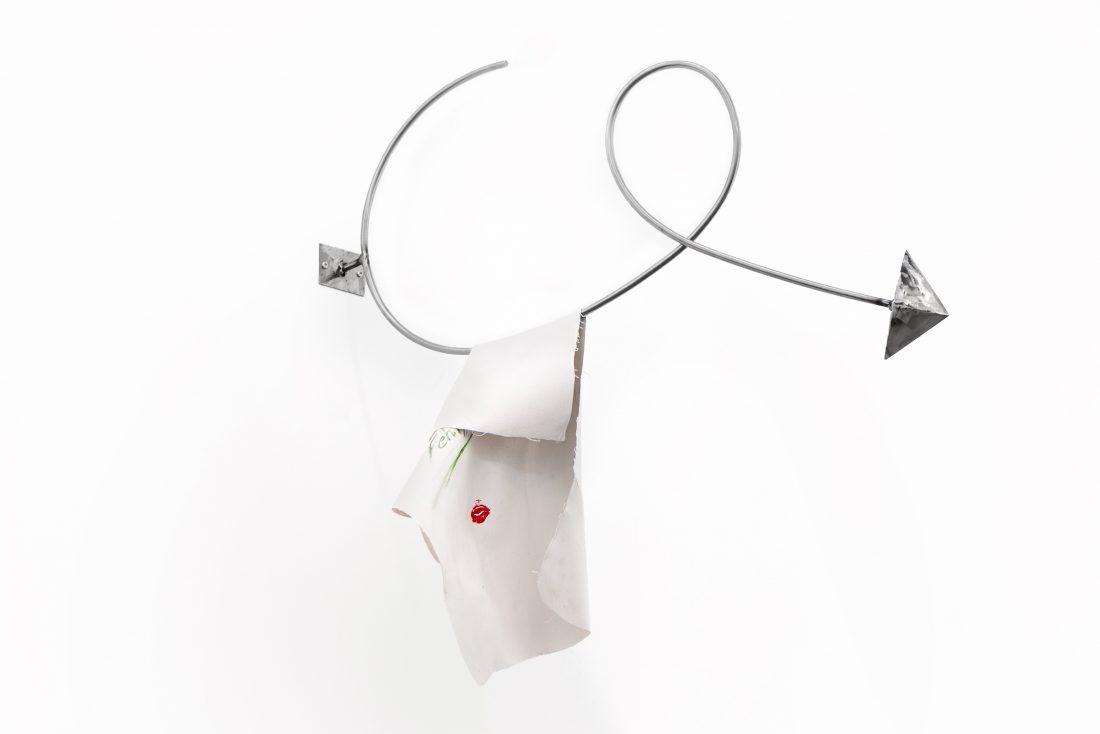
The central sculpture is accompanied by two smaller elements. They resemble pieces of a torn note whose text is no longer legible. The inspiration for this was a love letter from Germany, dating to 1943, that Lehan encountered while visiting the Jewish Museum in Berlin. It was written by a Jewish woman to her German female lover, detailing the vows she makes to her. Throughout history, love letters have served as testimonies to intimate human relationships, bearing traces of their historical, political and social conditions. They offer a close look at individuals‘ day-to-day lives, their emotions and most private thoughts. Interweaving mythical and historical notions, Lehan’s installation unfolds like a love letter that was never written: a gesture tenderly offered but never fully delivered, nor definitively answered.

In the experimental and communicative exhibition format Whisper Down the Lane, the roles and functions of hosting and being hosted become fluid: in line with the eponymous children’s game, the exhibiting artists themselves choose the next person. With the project, the Kunsthaus transfers part of the curatorial responsibility to the artists themselves, with the aim of creating alternative institutional modes of access and rendering local network structures visible both in terms of personal ties and with regard to artistic approaches. So far, works by Jaewon Kim, Fritz Lehmann, Altay Tuz, Pia Pospischil, Luzia Cruz, Laurel Chokoago and Cho Ari have been shown as part of Whisper Down the Lane.


Carolina Lehan (*1992) holds a Master of Fine Arts from HFBK, Hamburg in 2025 and a Bachelor from Bezalel Academy of Arts & Design, Jerusalem. Her work has been exhibited at Levantehaus Gallery, Hamburg (2025); Frappant Gallery, Hamburg (2025), The Lobby Art Space, Tel Aviv-Yafo (2024); Gruppe Motto, Hamburg (2024); Atelier Shemi, Kabri (2023) and Barbur Gallery, Jerusalem (2021) among others. She lives and works in Hamburg.


Thursday, 5 February 2026, 6 pm
Opening
in the context of Panorama XIX with A.K. Klosowski & Junbo Huang

Katharina Duve

My Hand Seeks the Way

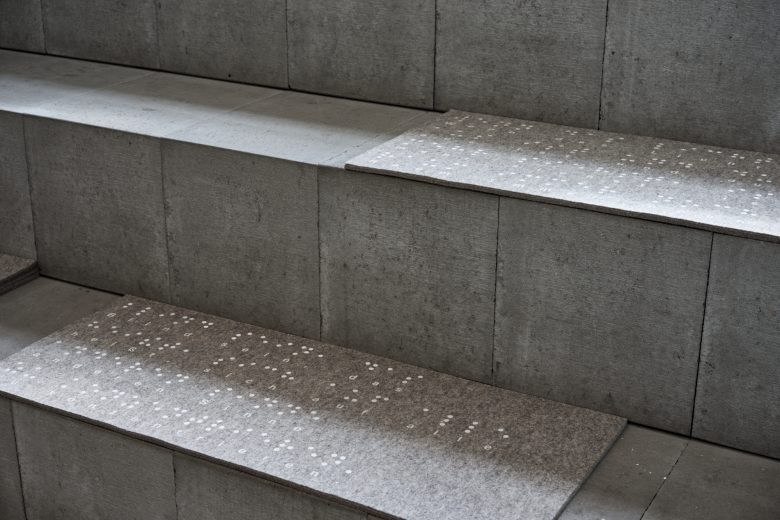
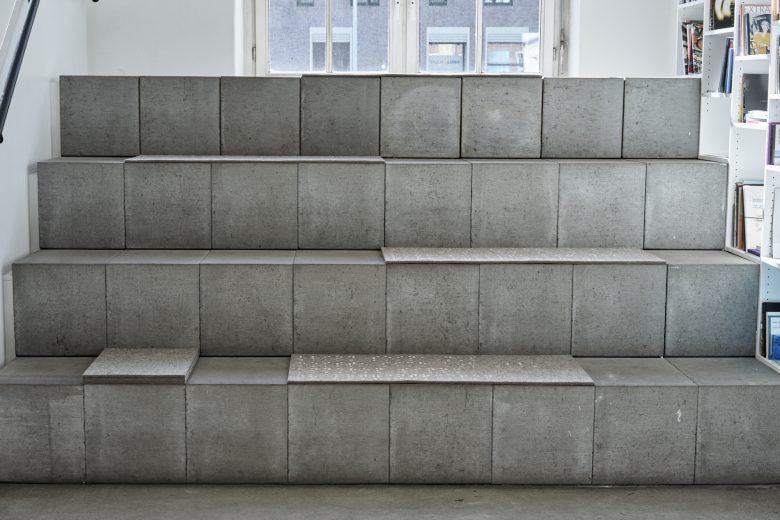
Image 1-3: Installation view: Katharina Duve – My Hand Seeks the Way, Kunsthaus Hamburg 2024, Photos: Antje Sauer
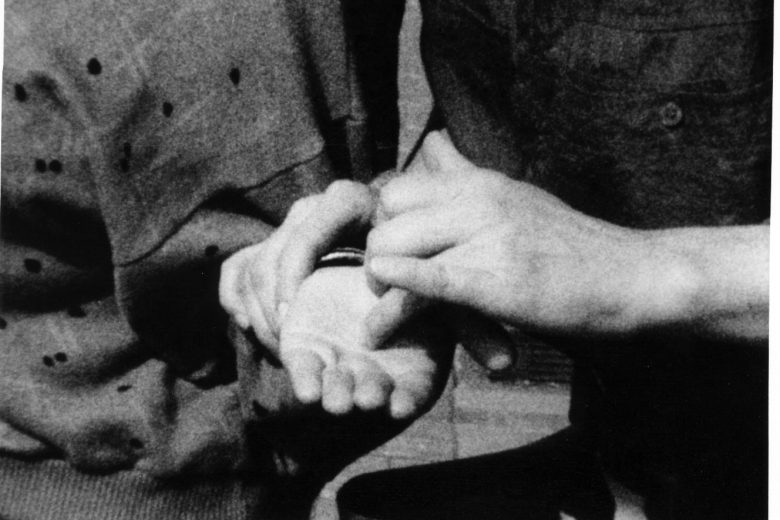
Image 4: Nina Rippel, Der geflüsterte Film (film still)


Katharina Duve
My Hand Seeks the Way

From 4 April 2024
Kunsthaus foyer


Situated between the street and the exhibition space, the foyer of the Kunsthaus is a place of transition; a threshold where modes of perception shift and questions about accessibility become evident. Following on from that observation, the Hamburg-based artist Katharina Duve has designed a new work for the stairs of the space.

My Hand Seeks the Way (2024) draws on an experimental film by Nina Rippel from 1992, which deals with the richness of human sensory impressions based on the perceptual world of blind people. Quotes from Rippel’s Der geflüsterte Film (“The Whispered Film”), her text Das Nicht-Sichtbare als Evidenz – Betrachtungen einer filmischen Praxis (“The Non-visible as Evidence – Reflections on a Cinematic Practice”) as well as poetic reflections by Katharina Duve herself were flocked onto eight seating elements made from felt in Braille and black letter. Thus, the work invites people with and without visual impairments to engage in an exchange about the complexity of perception through touch. Because not seeing does not mean perceiving less, but rather referring to an alternative spectrum of perceptions.


 Katharina Duve (*1980, Schwerin, GER) works in the fields of film, costume and performance. She is part of the filmmakers’ group Auge Altona, a collaborator of the music group Deichkind and a member of the performance collective geheimagentur. Since 2022, she has been a professor of Time-based Media at HAW Hamburg. Her artistic works have been shown at the Falckenberg Collection (2023), the International Short Film Festival Oberhausen (most recently in 2022), the Tate Modern, London (2017) and Brut, Vienna (2017), among others. She lives and works in Hamburg.

Jil Lahr

Sticky Business

Installation view: Jil Lahr. Sticky Business, Kunsthaus Hamburg 2023, Photos: Antje Sauer


Jil Lahr
Sticky Business

From 11 November 2023
Kunsthaus Hamburg


Like in the cabinets of curiosities from the early phase of the museum history, Jil Lahr mixes objects of different origins and purposes to create space-related installations, drawing on an extensive collection. Removed from their original settings, the objects of global everyday life trigger new associations, which often reveal the bizarre and humorous nature of massproduced items. By taking them out of their conventional context of use, the artist addresses Western consumerism and refers to entertainment culture.

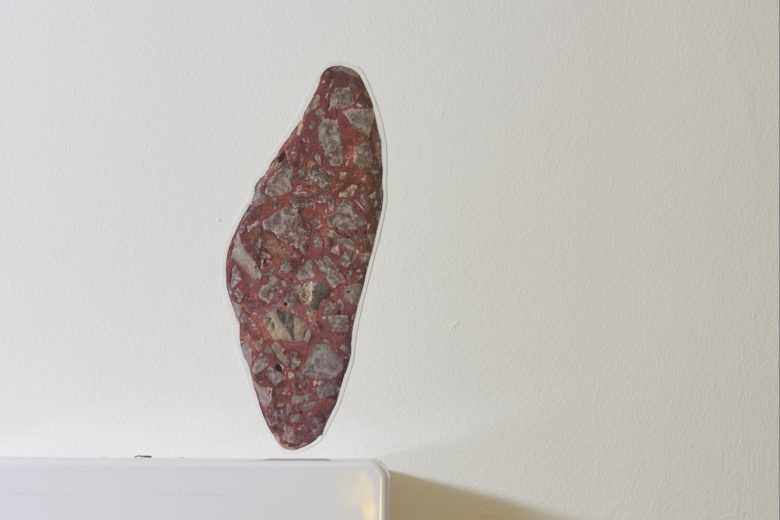
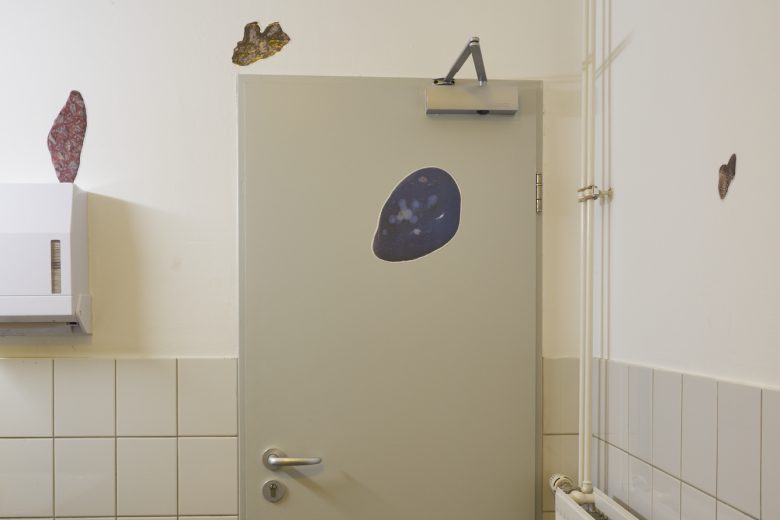
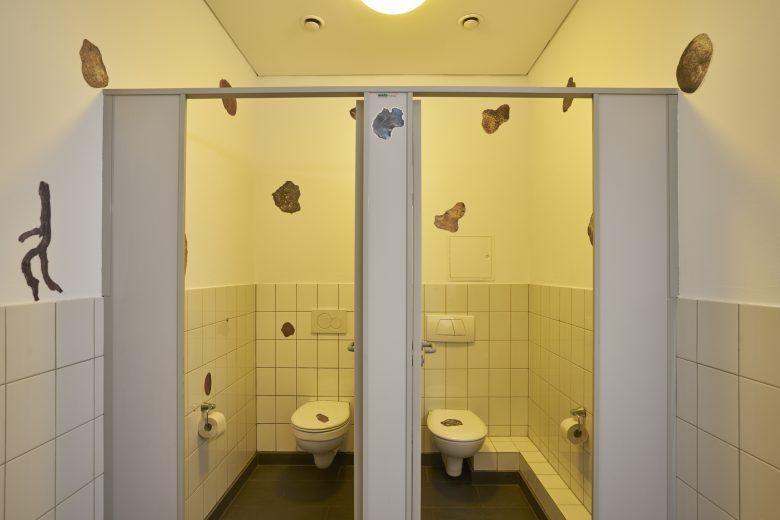
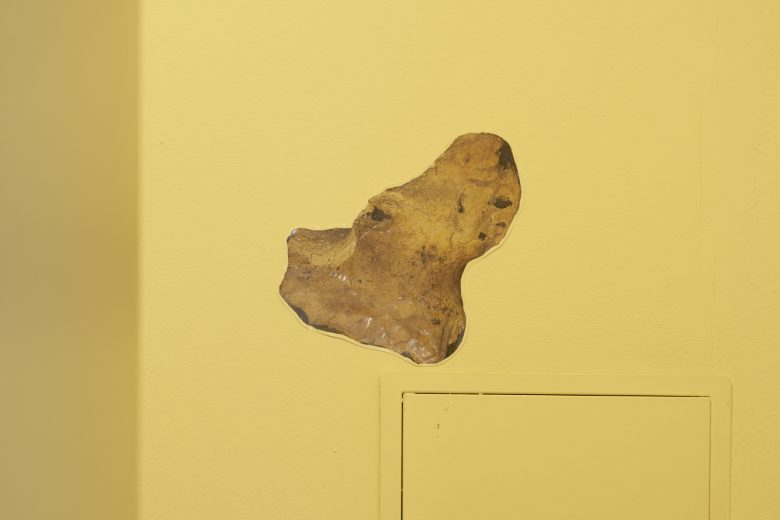
For the toilets of the Kunsthaus, Jil Lahr has developed the permanent installation Sticky Business. She intuitively redesigned the rooms using stickers that depict stones from her own archive. The natural objects, charged with personal memories, float in space and provide a wry commentary on the functional interior.